Modern platforms are rewriting the playbook for the IT channel.
When your sales model meets a digital-first reality
IT resellers and MSPs have never had better access to products, vendors, and market opportunities — yet many are facing an uncomfortable reality: margins are under pressure, sales cycles feel heavier, and customers expect more than the traditional model can reliably deliver.
This is not because the channel lacks competence. It’s because the rules of buying have changed.
Customer expectations are increasingly shaped by the digital standard of modern commerce, while many sales and delivery processes in the channel are still built for yesterday’s operating model.
That creates a growth gap — the gap between how customers want to buy, and how many MSPs are still equipped to sell.
Buyers have moved on — and their expectations moved with them
In B2B, friction used to be accepted. It was normal that purchasing took time, quotes were sent by email, orders were validated manually, and delivery status required multiple follow-ups.
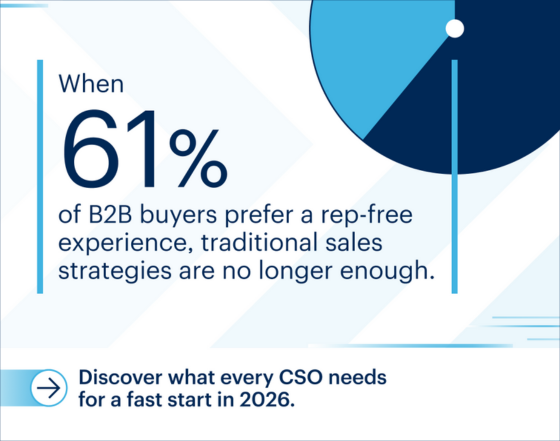
But today, B2B customers are making one thing clear: they expect the same speed, clarity, and control that they experience in modern digital buying journeys.
In fact, Gartner has highlighted how B2B buyers increasingly prefer independent digital buying experiences — especially when researching and learning — while still valuing seller input for context-driven decisions.
This is where the pressure builds:
The buyer is ready for a digital-first experience. The supplier side often isn’t.
And when that happens, buying momentum disappears.
Sales teams are losing time to what should already be automated
Most CEOs and sales leaders in the MSP space will recognize the pattern:
- ,“We spend too much time just finding the right products.”
- “Quoting takes too long.”
- “We lose control over what was ordered and when it will be delivered.”
- “Customer follow-up is too dependent on manual coordination.”
This isn’t a sales capability problem. It’s a structural problem.
McKinsey’s work on productivity and technology adoption shows that organizations still have massive potential in automation — and that the biggest barriers to scaling impact often sit in execution and leadership speed, not employee readiness.
In other words: MSPs want growth, but too much capacity is tied up in friction.
The product–service–delivery disconnect is killing scalability
One of the most underestimated challenges in the channel is just how fragmented the commercial engine has become.
The reality for many IT resellers and MSPs looks like this:
- Multiple distributors
- Different pricing structures and discount models
- Several portals and ordering flows
- Separate systems for delivery, service, and invoicing
- Manual handovers between sales and operations
On paper, the business sells IT. In practice, it spends an extraordinary amount of time on IT administration.
And when you spend too much time administering, three things happen:
- Profitability declines (less time for advisory selling)
- Customer experience suffers (slow delivery and low transparency)
- Growth hits a ceiling (scaling requires more people, not better flow)
This becomes even more critical as customers demand stronger performance in:
- security
- compliance
- documentation
- governance
- reporting and visibility
The winners are building sales machines — not just sales teams
This is where innovation matters, and why new platform approaches are increasingly showing up across the industry.
Modern platforms are not “tools.” There are ways to connect sales, service, delivery, and customer experience into a structured commercial flow.
The MSP model of the future is not just about having great sellers — it’s about giving them a system that allows them to focus on:
- consultative sales
- customer value and outcomes
- upsell and retention
- lifecycle expansion
- relationship-building (where humans truly matter)
At the same time, customers want:
- visibility
- easy ordering
- predictable delivery
- a professional, modern buying experience
Salesforce research has repeatedly highlighted how customer expectations increasingly revolve around connected experiences across channels and touchpoints — and that applies to business buyers too.
What this “gap” really is — in one sentence
The growth gap appears when a reseller has strong products and services, but lacks the structure to make them:
- easy to package
- easy to sell
- easy to deliver
- easy to scale and follow up
This is not just a technical gap.
It’s a commercial gap.
And that’s why platform innovation is becoming a strategic move — not a “nice to have.”
What CEOs and Sales Directors should do next
Here are three leadership-level questions worth bringing into your strategy discussions:
1. Does our sales process scale — without increasing headcount at the same pace?
If growth requires constant hiring just to keep up, the commercial structure is likely the limiting factor.
2. Is it genuinely easy for customers to buy from us?
If every order depends on email threads, manual quoting, and repeated clarification — the customer experience is slower than it should be.
3. Do we have control from sale to delivery — or do we rely on internal “workarounds”?
If handovers happen through spreadsheets, Slack messages, and “we’ll sort it out in a meeting,” your margins will eventually reflect it.
Innovation is becoming the channel’s margin-protection strategy
The MSP role remains critical.
But the traditional model will not automatically stay profitable.
The companies that win in the next stage of the market will be the ones that combine:
- deep channel expertise
- digital-first customer buying journeys
- structure and automation across delivery and customer lifecycle
That’s how innovative platforms are closing the gap: not by replacing sales, but by enabling sales teams to operate with speed, control, transparency — and scale.