Navigating constant change - Why an experience-led strategy is essential
We’re all customers. In our personal lives and in our professional roles. We all know how a great experience feels —and how quickly a poor one erodes trust. But in today’s world, where change is constant and disruption is the new normal, we need to think bigger. It's no longer just about delivering a great product or service — it’s about crafting connected, consistent experiences for both the people using your solutions and the people building them.
In 2026, building a successful digital business isn’t just about what you deliver — it’s about how you deliver it. The organisations that are pulling ahead aren’t just product-led. They’re experience-led.
A new era of business resilience
From pandemics to global financial crises and geopolitical tensions, disruption has become part of the backdrop for modern business. The last few years have shown us that uncertainty isn’t going away — but adaptability can be designed. The economy may be more stable now than during previous periods of high inflation, but businesses are still under pressure to protect margins, attract the right talent, and deliver strong performance.
Technology continues to transform how businesses deliver value. But for software companies like ZaveIT, it’s clear that real differentiation now lies in the total experience — not just for end customers, but for partners, employees, and every stakeholder in the ecosystem.
Why employee and customer experiences are inseparable
It's easy to treat customer experience (CX) and employee experience (EX) as separate challenges, owned by different departments. But in modern digital operations, they're tightly interlinked. When internal tools are clunky or workflows are slow, it shows in delayed responses, inconsistent service, and customer churn.
In contrast, when employees have access to integrated, intuitive systems, they can focus on what really matters: solving problems faster, collaborating smarter, and delivering consistent value. That’s not just good for morale — it’s good for business.
Recent research backs this up:
A study by IDC found that 85% of organisations believe improved employee experience leads to better customer experience, higher satisfaction, and increased revenue.
Harvard Business Review also reported that moving from the bottom to the top quartile in employee experience can boost revenue by over 50%, with similar gains in profitability.
According to PwC, 58% of leaders now include customer satisfaction metrics in employee performance evaluation, showing how deeply connected these domains have become.
This isn’t just about better surveys or higher NPS scores. It’s about creating real, measurable value — for customers, employees, and the business.
Microsoft CEO Satya Nadella recently highlighted this point when talking about strategic technology budgets. He said:
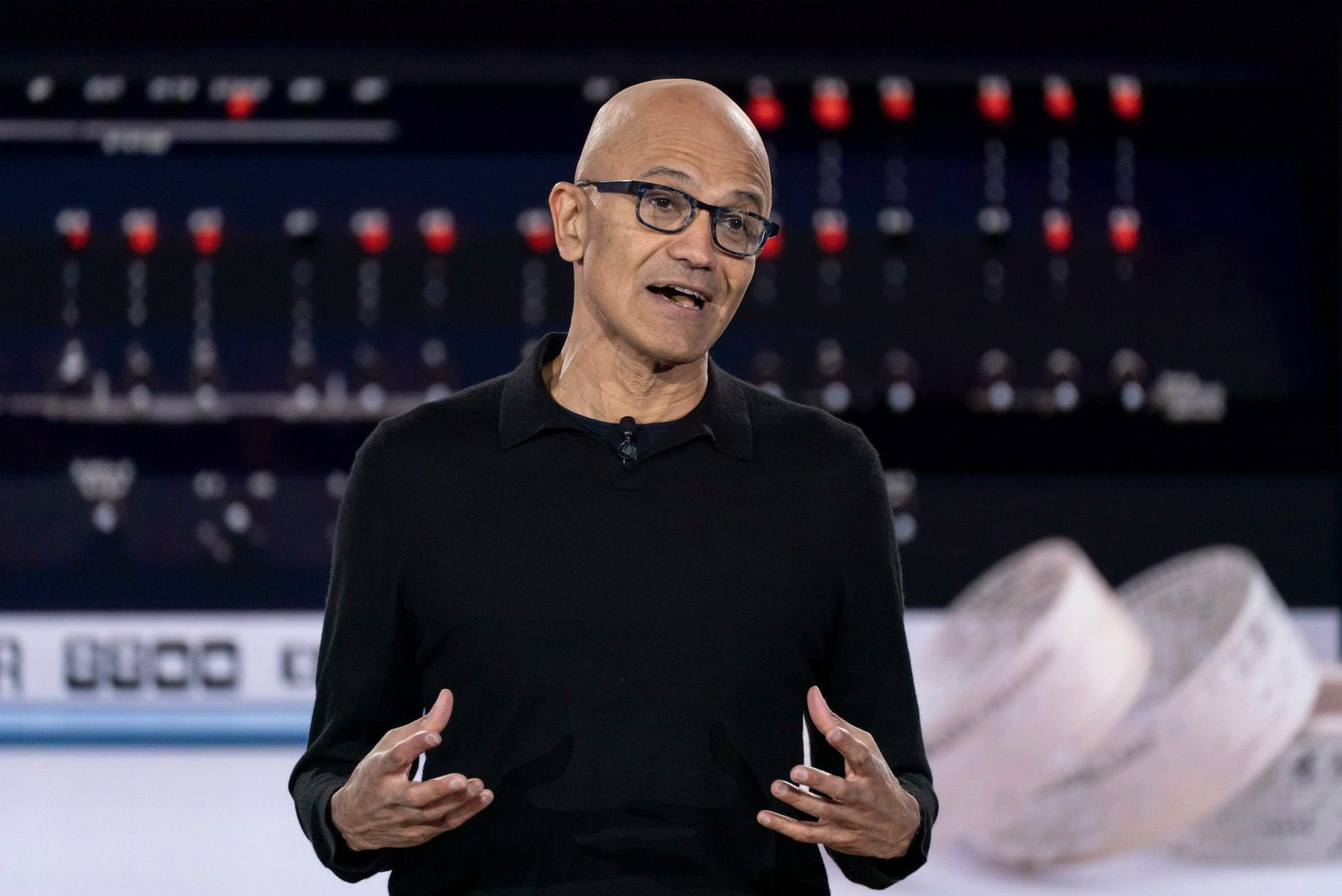
“In the conversations we’re having with our customers, the interesting thing I find from perhaps even past challenges — whether macro or micro — is I don’t hear of businesses looking to their IT budgets or digital transformation projects as the place for cuts.
If anything, some of these projects are the way they’re going to accelerate their transformation or, for that matter — automation, for example. I have not seen this level of demand for automation technology to improve productivity, because in an inflationary environment, the only deflationary force is software.” Microsoft CEO Satya Nadella
Breaking silos: CX + EX = TX
Traditionally, customer experience (CX) was the domain of sales and marketing. Employee experience (EX) was owned by HR andIT. But today, that siloed thinking is outdated.
Total Experience (TX) is a more holistic approach — connecting employee and customer journeys to create seamless, value-driven experiences. It means:
- Removing friction from internal workflows
- Empowering employees to do their best work
- Delivering consistent, high-quality experiences to customers
When experience is seen as a shared goal —not a departmental responsibility — it becomes a powerful force for transformation.
From product features to frictionless journeys
For years, digital transformation was seen as a tool for scale or automation. But in today’s B2B market, it’s increasingly a question of friction. Every unnecessary step, disconnected platform, or manual task adds drag — and ultimately impacts the end-user experience.
An experience-led strategy focuses on removing that drag. For B2B software companies, this might mean:
- Designing platforms that integrate seamlessly with existing partner tools
- Automating repetitive admin so teams can focus on value creation
- Providing consistent service and support that builds long-term trust
- Enabling self-service where it makes sense, and human support where it matters
In other words: better experiences drive better outcomes — not just in support tickets closed, but in customer loyalty, retention, and growth.
Technology as a Catalyst
Technology alone doesn’t solve business challenges. But when used strategically — to automate, streamline, and connect— it becomes a multiplier.
In today’s business environment, software can even be seen as deflationary: increasing productivity while reducing unit costs. Automation, low-code platforms, and self-service help organizations move faster, deliver better, and scale smarter.
The result? Employees focus on higher-value work. Customers enjoy faster processes and more reliable services. And the organization becomes more resilient and responsive.
Building a culture around experience
Experience-led growth isn’t just a strategy — it’s a mindset. It requires leadership commitment, cross-functional collaboration, and a shared belief that how we work is just as important as what we build.
At ZaveIT, we believe in enabling our customers and partners to do more with less — not through complexity, but through clarity. That means building tools that make work feel smoother, more intuitive, and more connected.
Leading through experience
In a market where speed and scale are no longer enough, experience is the new competitive edge.
B2B buyers expect consumer-grade experiences. Employees want tools that empower, not frustrate. And companies that align these expectations into a unified strategy will be the ones that lead — not just survive — through the next wave of change.
For ZaveIT, this isn’t just a trend. It’s how we build for long-term growth.
Want to learn how ZaveIT helps IT resellers and MSPs build better experiences for both customers and teams?
Explore our platform and see how total experience can drive your next phase of growth.