Choosing the right sales automation platform can make or break an MSP's ability to grow recurring revenue. With so many options built for general SaaS or enterprise sales teams, the real challenge is finding one designed for how IT resellers actually operate.
This article walks you through the key criteria worth evaluating when comparing IT sales automation and subscription management platforms. Each factor reflects what matters in day-to-day MSP workflows. ZaveIT gives MSPs a structured way to connect sales, delivery, and customer experience in a single platform.
Key Takeaways: What MSPs Should Compare in Sales Automation Platforms
Evaluate how deeply a platform integrates with your existing PSA, billing, distributor, and CRM systems.
Self-service portals reduce support volume and let your customers browse, order, and manage subscriptions independently.
Recurring billing support should cover subscriptions, usage-based pricing, renewals, and mid-cycle changes without manual work.
ZaveIT connects catalog management, quoting, delivery automation, and customer portals into one MSP-focused commercial flow.
Delivery automation should trigger tasks and assign owners the moment an order is placed, not days later.
Criteria That Matter When Comparing MSP Sales Automation Tools
1. Integration Depth With Your Existing Stack
Your sales automation platform needs to work with the tools you already rely on. That means native connections to PSA systems like Autotask, ConnectWise, or HaloPSA, along with your CRM, ERP, and ticketing software. The fewer manual handoffs between systems, the faster your team can move.
Look for platforms that sync catalog data across distributors like Pax8, Arrow, or TD SYNNEX without manual exports or imports. If you spend more time on data entry than selling, your platform is working against you instead of accelerating your pipeline.
2. Self-Service Customer Portal Capabilities
A branded customer portal lets your clients browse your full service catalog, place orders, and manage their own subscriptions around the clock. This directly cuts down inbound support tickets and frees your team to focus on higher-value activities like growing accounts.
The portal should reflect your brand at every single touchpoint, not the platform vendor's identity. White-label options ensure your customers see your logo, colors, and messaging. This consistency builds trust and reinforces the professional image that keeps customers coming back.
3. Subscription and Recurring Billing Flexibility
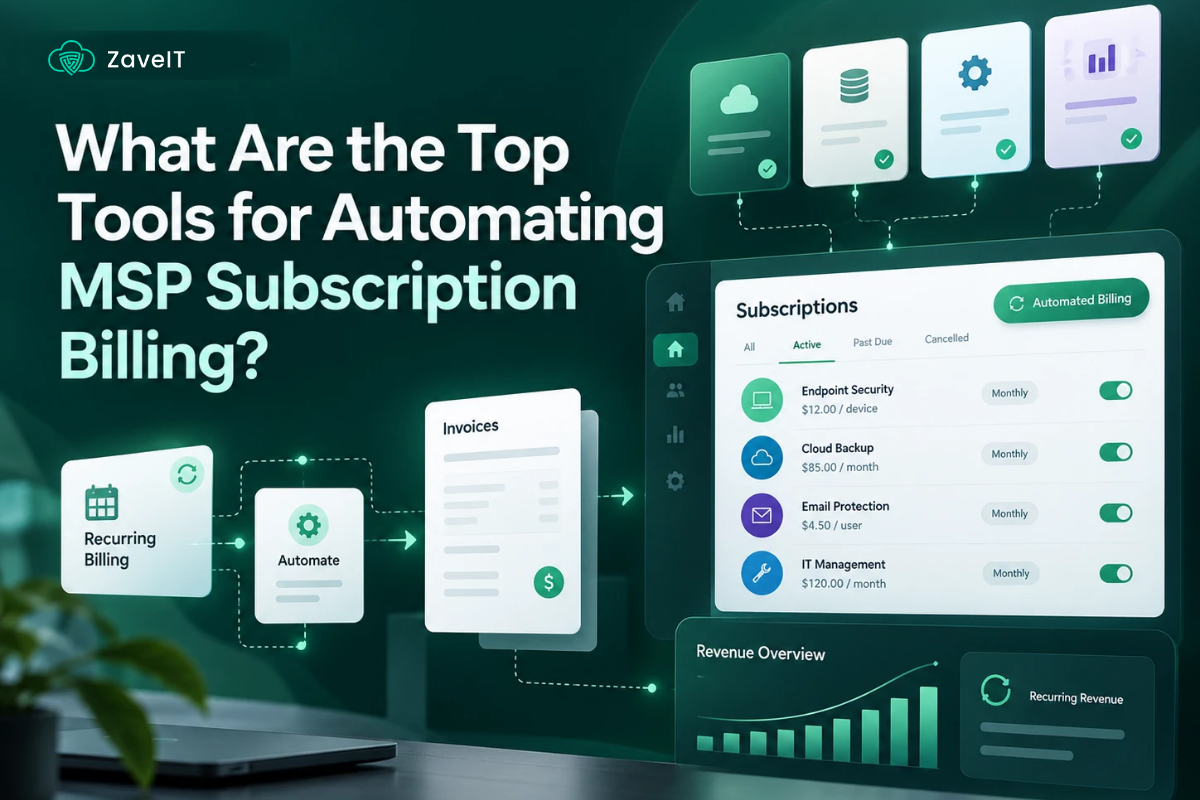
MSPs run on recurring revenue. Your platform needs to handle subscriptions, renewals, usage-based billing, and bundled offerings without requiring manual intervention each billing cycle. Automated proration for mid-cycle upgrades and downgrades is equally important when it comes to protecting your margins.
According to a 2025 Datto State of the MSP report, growing MSPs increasingly prioritize platforms that automate billing to protect margins as they scale. Look for billing engines that support tiered pricing, volume discounts, and contract renewals out of the box.
4. Service Catalog and Bundle Management
Your catalog is the backbone of everything you sell. A strong platform lets you structure products, licenses, managed services, and support tiers into clear bundles that are easy for both your sales team and your customers to understand.
Look for the ability to combine distributor products with your own proprietary services in a single offering. That flexibility lets you differentiate your catalog and build margins that pure reselling alone can't match. A well-structured catalog also speeds up quoting and reduces order errors.
5. Quote-to-Order Automation
Generating a quote, getting approval, and converting it to an order should be one connected workflow. Platforms that separate quoting from ordering create gaps where errors, delays, and missed revenue accumulate over time. Speed here directly affects your close rate.
Evaluate how the platform handles pricing rules, volume discounts, and custom configurations. Your pricing engine should apply rules automatically and trace how each price was calculated. Full visibility into pricing logic gives your team confidence and removes guesswork from every proposal.

6. Delivery and Fulfillment Automation
Getting the sale is only half the job. The platform should trigger delivery workflows automatically once an order is confirmed, assigning tasks to the right people and tracking progress in real time. Delays at this stage erode the trust you built during the sale.
Asynchronous delivery management lets your operations team work on fulfillment tasks without blocking the sales pipeline. For MSPs handling dozens or hundreds of orders each week, this kind of automation is the difference between controlled growth and operational overload.
7. Multi-Tier Partner and Reseller Support
If you work with partners or sub-resellers, your platform needs to support multi-tier access. That includes tiered pricing, catalog permissions, and branded portal views for each partner level. Each tier should operate independently while feeding into your central reporting.
Without this capability, scaling through a channel model becomes a tedious process of spreadsheets and custom pricing documents. A structured partner layer saves time, reduces pricing errors, and gives each partner a professional, on-brand experience when they engage with your catalog.
8. Reporting and Analytics for Sales Operations
You need full visibility into what's selling, what's stalling, and where your revenue is growing. Look for real-time dashboards that break down performance by product, sales channel, partner tier, and customer segment. Granular data helps you make faster, smarter decisions.
Reporting should go beyond basic revenue totals. Track order-to-delivery timelines, subscription churn rates, and upsell conversion to spot operational bottlenecks before they eat into your margins. Platforms that offer exportable reports and team-shareable dashboards save even more time across your organization.
9. API Access and Extensibility
No platform can cover every use case out of the box. An open API lets you extend core features, connect custom tools, and build workflows specific to your business. This extensibility is especially important for MSPs with unique operational requirements.
Check the quality of the API documentation and whether the vendor actively supports custom integrations. A well-documented API saves your development team hours of guesswork, speeds up deployment, and ensures your platform investment keeps pace with your evolving tech stack.
10. MSP Workflow Fit Over Generic Software Rankings
General-purpose sales automation tools are built for SaaS companies, e-commerce brands, or enterprise sales teams. MSPs need platforms designed for the unique flow of IT service commercialization, from distributor sourcing to managed service delivery.
Evaluate each platform against your real-world workflows. Does it support the way you package, price, sell, and deliver services today? Can it adapt as your business model evolves? Prioritize platforms that align with how your team already operates rather than forcing you into a generic mold.
How to Pick the Right Sales Automation Platform for Your MSP
The right platform should fit the way you already work, not force you to rebuild your processes from scratch. Start by mapping your current sales, billing, and delivery workflows. Then score each platform against the ten criteria above.
ZaveIT gives MSPs a structured commercial flow that connects sales, service, delivery, and customer experience in one platform. If you're ready to reduce manual work and accelerate your time-to-market, request a demo to see how it works for your business.
FAQs about What MSPs Should Compare in Sales Automation Platforms
What makes an IT sales automation platform MSP-ready?
An MSP-ready platform supports distributor integrations, service catalog management, recurring billing, and multi-tier partner access. ZaveIT delivers all of these in a single connected environment built for IT service commercialization.
How important is self-service for MSP customers?
Self-service portals let your customers order, upgrade, and manage subscriptions without contacting your support team. This reduces ticket volume and improves the buying experience. ZaveIT offers white-label customer portals that keep your brand front and center.
Can a sales automation platform handle both products and services?
Yes, the right platform lets you bundle hardware, software licenses, and managed services into unified offerings. ZaveIT connects distributor products with your own services so you can sell everything from one catalog.
What role does delivery automation play in MSP sales?
Delivery automation triggers tasks, assigns owners, and tracks fulfillment the moment an order is placed. This eliminates the gap between closing a sale and delivering the service. ZaveIT automates delivery plans linked directly to each catalog item.
How should MSPs evaluate integration capabilities?
Check for native connections to your PSA, CRM, ERP, and distributor systems. An open API is essential for custom workflows. ZaveIT integrates with tools like Pax8, Arrow, HubSpot, Xero, and many more out of the box.
Why is MSP-specific workflow fit more valuable than generic feature lists?
Generic tools often lack catalog-to-delivery workflows, multi-tier pricing, and partner portal access. ZaveIT focuses on the specific commercial flow MSPs need, from quoting and ordering to provisioning and billing.