Your MSP’s Revenue Is Growing. Why Isn’t Its Margin?
Revenue is up.
You are signing more customers, adding services, renewing contracts and perhaps even growing recurring revenue.
On paper, the MSP looks healthier than it did a year ago.
But then you look at the margin.
It has barely moved.
Or worse, it has gone backwards.
For many MSP owners and IT resellers, this is one of the most frustrating stages of growth. The business is busier, the team is larger and customers are buying more yet the financial return does not seem to reflect the extra effort.
The problem is often not sales.
It is how the revenue is being created and delivered.
More revenue does not automatically mean better revenue
A £10,000 contract and another £10,000 contract can look identical on a revenue report.
Operationally, they can be completely different.
One might use standard services, predictable delivery and established pricing.
The other might involve custom configurations, repeated sales discussions, manual quoting, special vendor arrangements and hours of unplanned support.
Same revenue.
Very different margin.
As an MSP grows, these differences become increasingly important. A business can add customers faster than it improves the systems required to serve them.
Eventually, growth starts adding complexity instead of profitability.
Custom work quietly eats into margin
Customisation often starts with good intentions.
A customer needs something slightly different. Sales adjusts the proposal. Operations finds a workaround. Pricing gets modified. Someone creates another spreadsheet.
For one customer, this is manageable.
Repeat it across 30, 50 or 100 customers and you no longer have one service offering.
You have dozens of variations of it.
That creates work everywhere.
Quotes take longer to prepare. Engineers need customer-specific knowledge. Billing becomes harder to verify. Renewals require another round of checking. New employees take longer to understand what has actually been sold.
None of those activities necessarily appear as a separate cost against the contract.
But somebody is paying for them.
Usually, it is your margin.
Pricing may not be keeping pace with delivery
MSPs tend to watch vendor costs closely.
The more difficult costs to see are internal.
How many hours does it really take to onboard a customer?
How often does the service desk exceed the assumptions made when the contract was priced?
How much time is spent correcting quotes, checking subscriptions or resolving billing discrepancies?
And when was the last time the actual cost-to-serve was compared with the price customers are paying?
A service that was profitable two years ago may not be profitable today.
Salary costs change. Vendor pricing changes. Customer expectations change. The amount of support required changes.
If service pricing remains static while delivery costs continue moving, margin erosion is almost inevitable.
Inside image suggestion: A clean line graphic with Customer Price remaining flat while Cost to Serve gradually rises until the margin gap becomes visibly smaller.
Your highest-paid people may be doing low-value work
There is another margin problem that rarely appears clearly in financial reports: dependency.
Who needs to approve a non-standard quote?
Who remembers how a particular customer was priced?
Who decides which services can be bundled?
Who gets involved when sales cannot find the right information?
In many MSPs, the answer is still the owner, CEO or one of a handful of senior people.
That creates an expensive bottleneck.
Your most experienced people should be making strategic decisions, building partnerships and improving the business.
They should not need to reconstruct pricing logic every time somebody wants to sell something.
If revenue growth requires proportional growth in management involvement, the model is difficult to scale profitably.
Tool sprawl creates operational leakage
Most MSPs are not short of software.
PSA. CRM. Distributor portals. Vendor dashboards. Billing systems. Spreadsheets. Documentation platforms.
The issue is what happens between them.
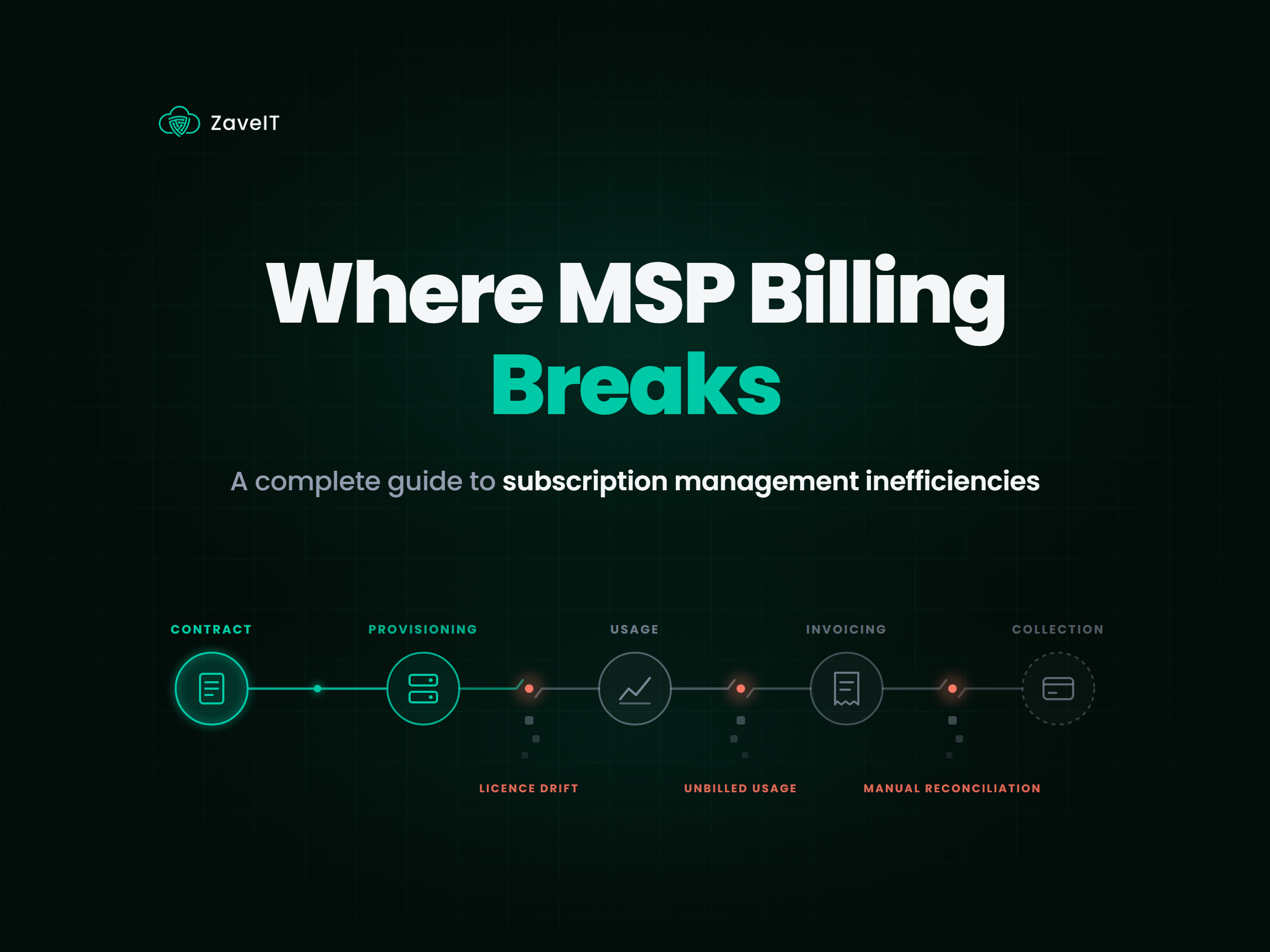
A quote may begin in one system, rely on pricing stored somewhere else, require a manual vendor check, move into another tool for provisioning and eventually arrive in finance for billing.
Every manual handoff introduces an opportunity for leakage.
A missed licence.
An outdated price.
A forgotten increase.
A service delivered but never billed.
Individually, these mistakes can look insignificant.
Across an entire customer base, they add up.
The answer is not simply “sell more”
When margins are under pressure, increasing sales can feel like the obvious response.
But scaling an inefficient commercial model simply creates a larger inefficient commercial model.
The more sustainable approach is to make the business easier to sell from and easier to deliver.
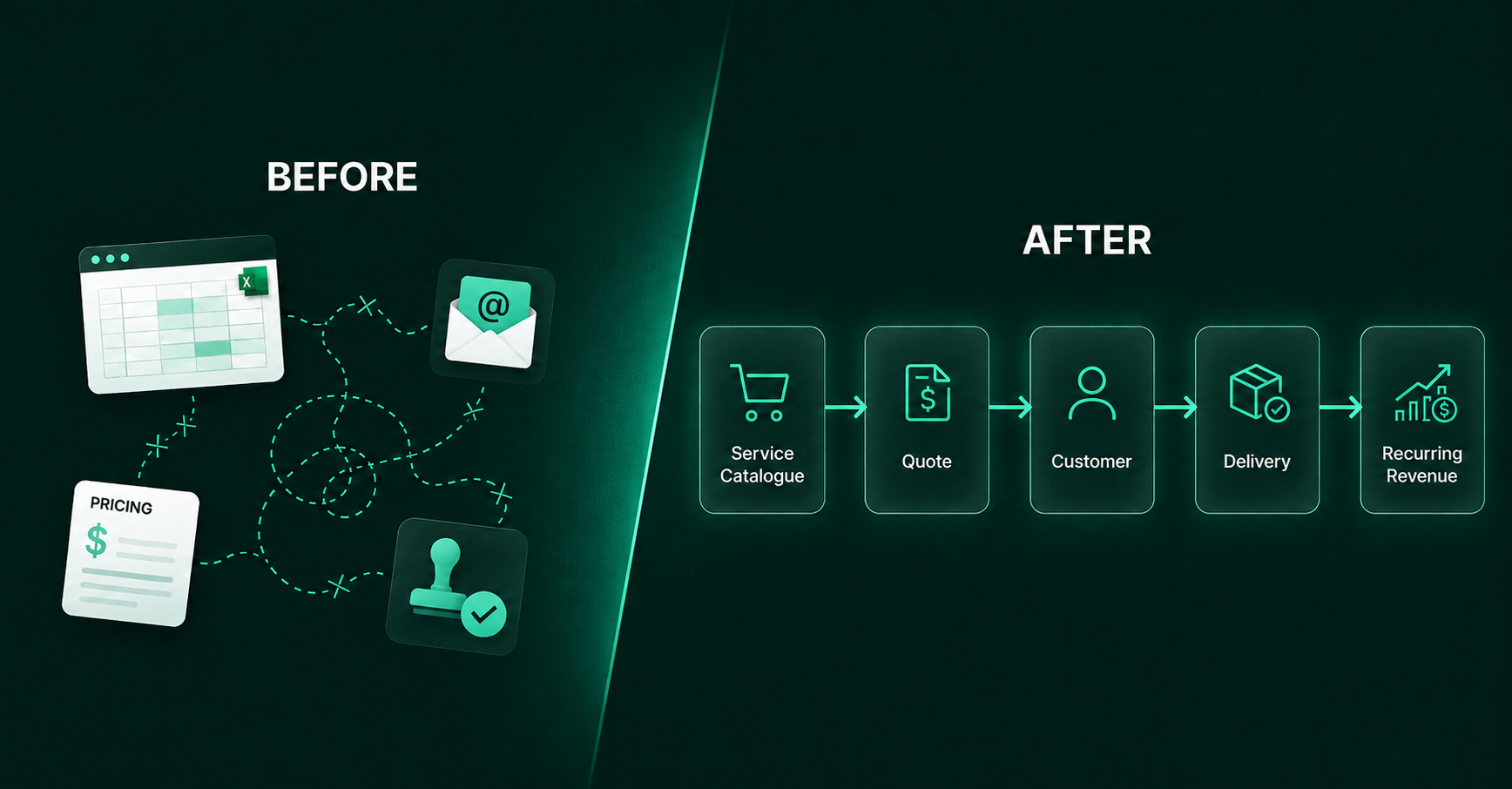
That means defining repeatable services, establishing consistent pricing, reducing unnecessary customisation and making approved offerings accessible to the people selling them.
It also means connecting the commercial journey more closely from service catalogue and quote to customer purchase, fulfilment and recurring billing.
Margin is ultimately an operational metric
If your MSP is growing revenue but margin is standing still, finance may only be showing you the symptom.
The cause is often buried inside the way services are packaged, priced, sold and delivered.
Growth becomes more valuable when every new customer does not require another workaround.
That is where productising services becomes important.
Build the service properly once. Define what is included. Establish the pricing. Make it easy for sales teams and customers to buy. Then repeat the model without rebuilding the process for every deal.
Ready to make your services easier to sell and scale?
ZaveIT helps MSPs and IT resellers productise their services, standardise pricing and create a more connected path from catalogue to customer purchase.
See how ZaveIT can help you scale recurring revenue without scaling the complexity.